Bevel Width Explained: What It Reveals About Your Sharpening Technique
Bevel width isn't just some nerd metric. It's the physical diary of every sharpening session you've ever done. Wide bevels scream inconsistent angles. Narrow, clean bevels whisper "this person knows what they're doing." When you look at a knife edge under good light, that shiny strip of steel is a record. It doesn't lie. Most people think sharpness is the only thing that matters. Actually, the geometry of that bevel dictates how the knife moves through food, how durable the edge is, and whether you're grinding away your blade for no reason.
Lopsided Bevels Mean Lopsided Pressure
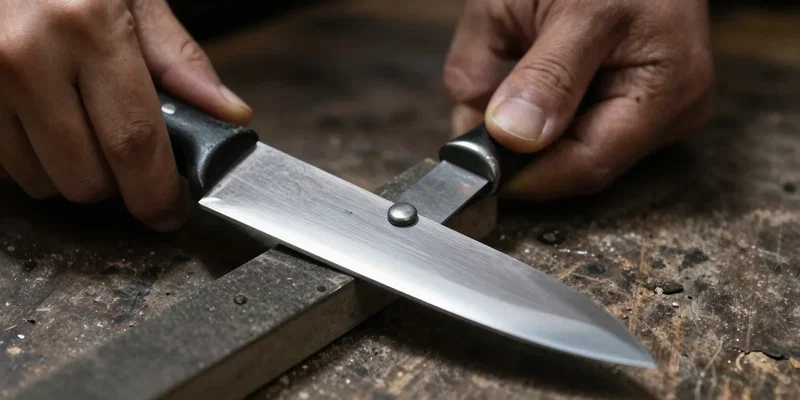
Nobody has perfectly symmetrical hands. Your dominant side pushes harder. It's obvious once you look. One bevel ends up wide and polished, the other looks like an afterthought. That's your sharpening technique on full display, and it ruins your edge symmetry. If you're right-handed, you probably bear down more on the right side of the edge. The result? An asymmetrical bevel that steers the knife left when you cut straight down. Annoying. Fixing it means retraining your muscle memory, not buying a new stone.
Steep Angles Make Fat Bevels
Here's the thing. Raising your angle by even a few degrees doesn't just change the edge. It changes everything. A higher angle means you're removing steel further back from the apex. That bevel width grows. The knife gets thicker behind the edge. Suddenly your laser gyuto cuts like a cleaver. Not good. Consistent angle control is the only way to keep those bevels narrow and the knife performing like it should. Freehand sharpeners know this pain. One wobble and you've got a bevel that looks like a ski slope.
Thin Knives Don't Forgive Bad Habits
Knife geometry sets the rules. A thin, hard Japanese blade will show every mistake in high definition. You can't hide sloppy technique behind a thick German workhorse. The bevel width on a thin knife doubles if your angle drifts. On a thick knife? You might not notice for months. That's why understanding your knife's baseline geometry matters before you even touch stone to steel. Match your sharpening technique to the blade, not the other way around.
You Can Shrink a Bevel Without Losing Your Mind
Wide bevels aren't a death sentence. You don't need a belt grinder or a weekend of misery. Start with a lower angle than your current bevel. Work slowly. Let the stone cut the shoulder back toward the edge. It's tedious. But it works. You're essentially reprofiling, just in slow motion. Once you get the bevel width back under control, maintain it. Keep your angles tight. Use a sharpie to check your work. Stop blaming the steel and start blaming the hand holding it.